
Basement Wall Insulation for Bare and Framed Walls
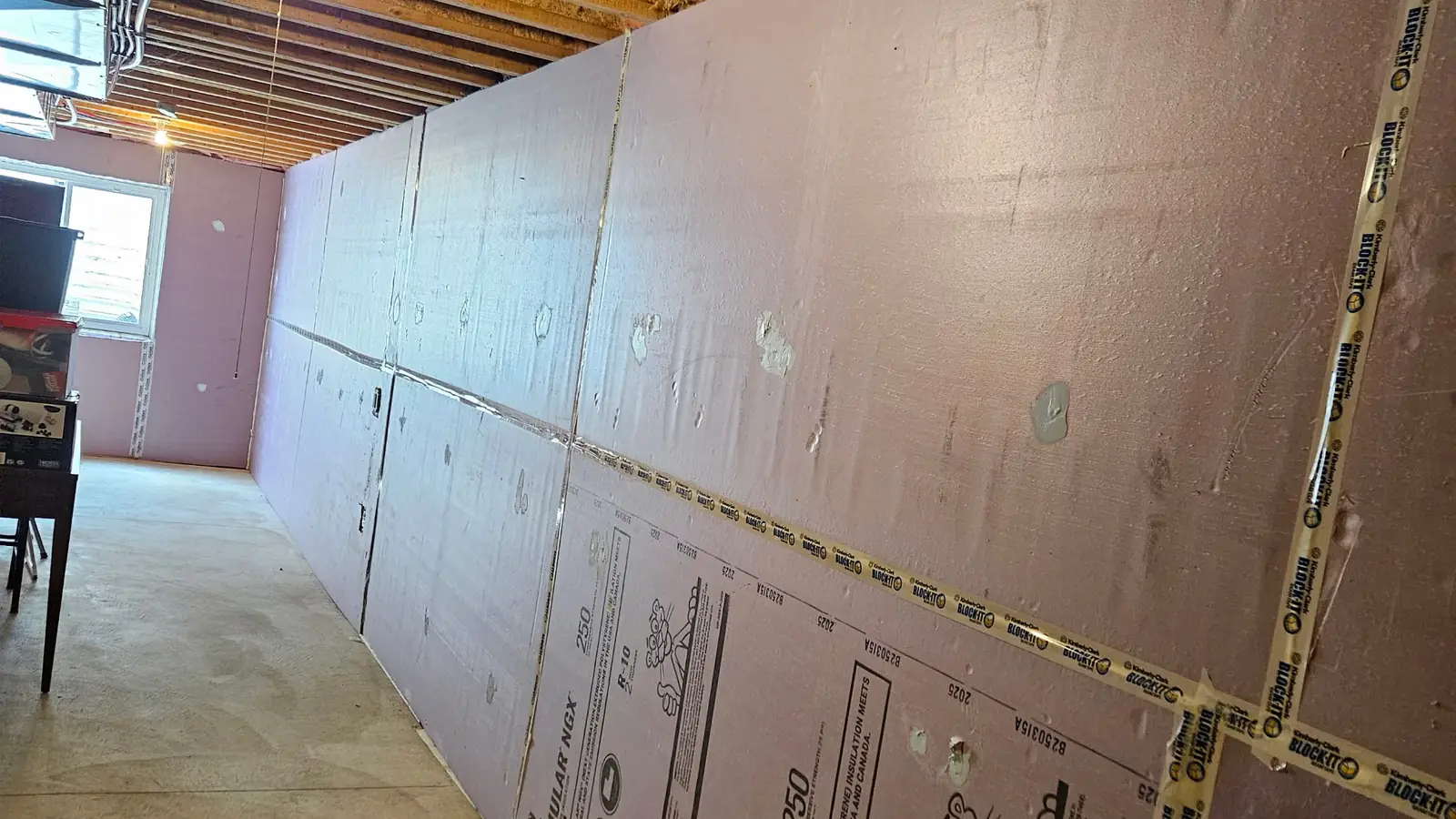
Bare foundation walls get foam board, glued on and taped at every seam. Walls that are already framed can be dense-packed with cellulose or filled with batting. Most basements take one to two days.
4.9 stars from 136 Google reviewsFree estimate
- About a 10 to 15 minute visit
- Your bid, usually within 24 hours
- Abraham calls or texts back within one business day.
Estimates are free within a half-hour drive of Des Moines.
- Owner on site for every job
- Same crew for 16 years, no subcontractors
- Over 2,000 homes since 2008
- Insured up to $2 million
Free estimate
- About a 10 to 15 minute visit
- Your bid, usually within 24 hours
- Abraham calls or texts back within one business day.
Estimates are free within a half-hour drive of Des Moines.
Bare foundation, framed walls, rim joists: what goes where
| What you have now | What Abraham can use |
|---|---|
| Bare foundation walls | Foam board, glued to the wall with the seams taped |
| Walls that are already framed | Dense-packed cellulose, batting, or the blown-in batting (BIB) system |
| Rim joists, the band of framing along the top of the basement wall | Spray foam, rigid foam board or batting |
Fix the water first
If the basement takes on water or the walls stay damp, that has to be fixed before any insulation goes on. Insulation over a wall that's still getting wet hides the problem instead of solving it. Mention any water you've had when you set up the estimate.
Foam board on a bare wall, start to finish
- 1
Look at the walls
At the estimate, Abraham checks what's on the walls now, bare or framed, and whether there's any sign of water. That tells him which method fits.
- 2
Glue the boards on
Each board is attached with an adhesive designed specifically for foam board, in the thickness you and Abraham settle on.
- 3
Tape the seams
The seams between boards are taped, so no open joints are left running up and across the wall.
- 4
Done in a day or two
Basement wall jobs usually take one to two days.
Get a bid on your basement walls
Abraham will look at the walls, tell you which method he'd use, and get you a bid. If you're planning to finish the basement later, tell him that too.
After the foam goes up, the finish is your call
Foam board is the insulation, not the finished wall, and it's meant to be covered, usually with framing and drywall. Who does that, and when, is up to you.
Cellulose is an option too. In framed walls, Abraham can dense-pack it into the stud cavities. It's the same material he prefers in attics and existing walls.
The material carries a 20-year warranty from Insulate Iowa, written on your invoice. And if the basement doesn't improve the way the two of you agreed, he comes back and reworks it at no extra cost.
Basement wall insulation questions
Can basement walls that are already framed be insulated?
Yes. Abraham can dense-pack the stud cavities with cellulose or fill them with batting. While the framing is still open, the blown-in batting (BIB) system is another option.
What thickness of foam board goes on the wall?
It depends on the job. Abraham can use foam board in different thicknesses, and he'll go over the options with you at the estimate.
Our basement has had water in it. Can it still be insulated?
Yes, once the water or moisture problem is fixed. That has to happen before any insulation goes on the walls.
Get a free estimate
Tell us about the house and what's bothering you. Abraham calls or texts back within one business day.
Estimates are free within a half-hour drive of Des Moines.
How we handle your information: privacy policy.